Before diving into specific stores and designers, a little context - because while walking around Georgia you might notice elements of traditional clothing appearing everywhere, from weddings and performances to contemporary fashion collections.
09 - Shop
მოდა
Georgian Aesthetics
What to wear. Where to look. What to buy.
Hope you will have so much fun with this section. Vancouver dresses like people might suddenly need to hike a mountain. Tbilisi dresses like if something dramatic happens unexpectedly, at least the burial outfit will look incredible.
National Clothes and Places to Shop
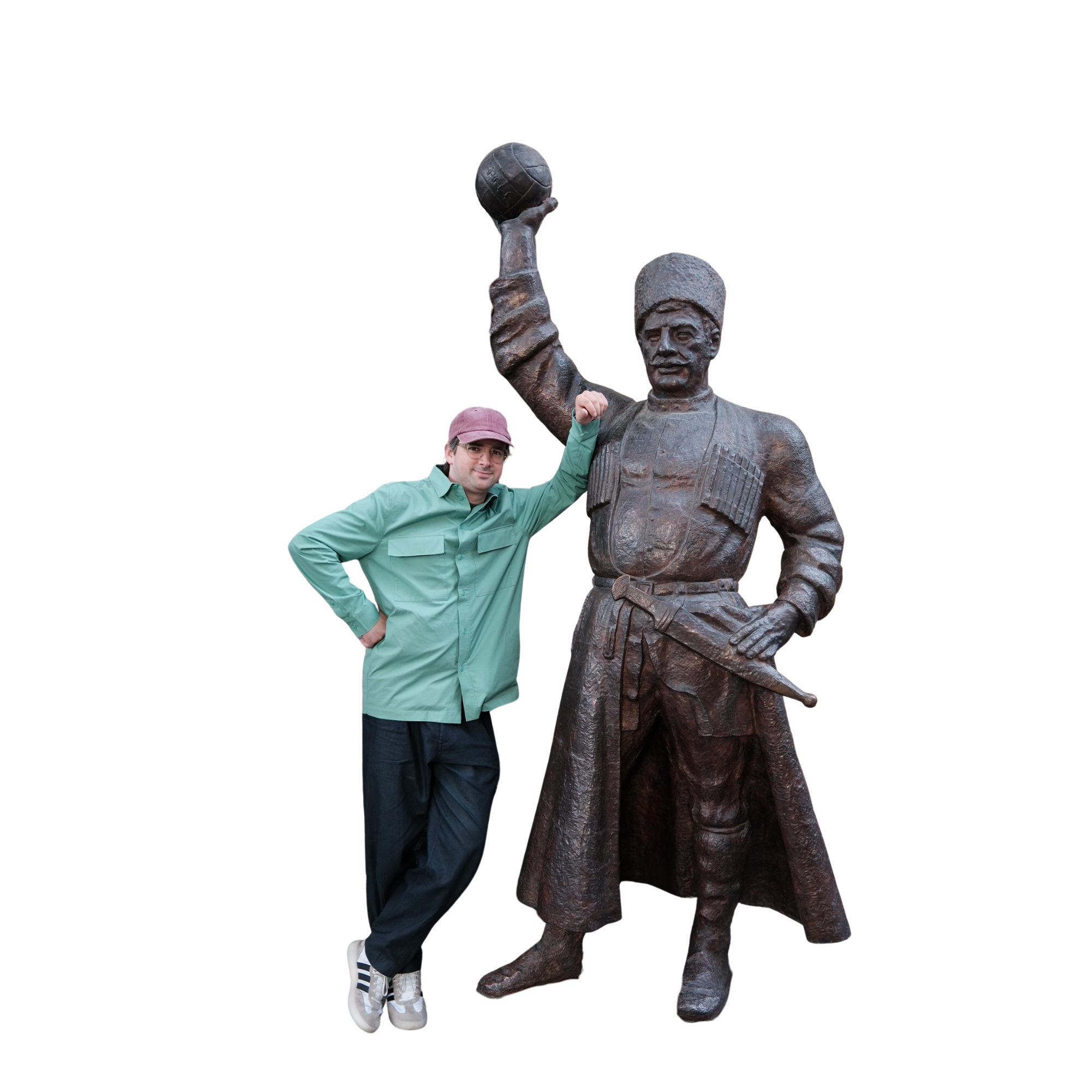
On traditional dress
The chokha is the traditional Georgian coat - a tailored, long garment with cartridge loops across the chest (originally for rifle ammunition, now purely decorative) and dramatic sleeves. You will see it at weddings, folk performances, and occasionally on the street. When you do, you will understand immediately why Georgian designers keep returning to it.
The chikhtikopi is the traditional women's headdress - a high, cone-shaped hat with a veil, tied to the Queen Tamar era and what Georgian female elegance looked like at its peak.
Modern designers work in dialogue with both - pulling these forms into contemporary garments without making costumes of them.
The Designers
Georgian fashion is having a real moment internationally. Here are the designers worth knowing.
Nino Kvitsiani / New Saukune
Visit →A Tbilisi-based label that works somewhere between Georgian tradition and contemporary fashion. Strong silhouettes, interesting textiles, the kind of garments that look very specific about what they are.
Nino Soviet Sewing Factory
Visit →A label built on Soviet-era factory aesthetics - utilitarian forms, industrial fabrics, workwear references reframed as something quietly radical. Unmistakably Georgian, unmistakably its own thing.
Avtandil
Visit →One of the most internationally recognized Georgian designers. Theatrical, crafted, unafraid of drama. Worth knowing if you want to understand where Georgian fashion's ambition lives.
Shavdia
Visit →A label that takes Georgian craft traditions - embroidery, textile techniques - and translates them into pieces that feel genuinely modern without losing the reference.
Ingorokva
Visit →Clean, precise, architectural. Georgian minimalism, which is a real thing and looks different from European minimalism in ways that are hard to explain until you see it.
Markets & Bazaars
If you feel adventurous
Dry Bridge Market
Daily, 12:00 – 17:00
The famous outdoor flea market on the bridge over the Mtkvari River. Open daily from noon to 5pm. Soviet-era objects, antique jewelry, old paintings, vintage textiles, Soviet kitchenware, unusual books. You will not need any of it. You will buy something anyway.
Tip →
Go without a specific plan. The point is the wandering.
View on Map
Google Maps
Second-Hand (Orsartulianebi District)
Weekdays and weekends
Tbilisi has a substantial second-hand clothing scene. Much of it is brand-new Korean clothing that arrives through back-channel routes and gets sold at almost nothing. Sofi has been going here since she was a student. It is an experience.
Tip →
Bring time and low expectations - which is exactly the right way to find extraordinary things.
View on Map
Google Maps
Dezertirebi Bazroba
Morning hours, best before noon
The massive food and goods market. Cheese, vegetables, spices, dried fruits, churchkhela, household goods, textiles. Many tourists find this overwhelming in the best way. If you want to understand where Tbilisi actually shops for food, this is it.
Tip →
Go hungry. Buy things you cannot identify. Ask what they are.
View on Map
Google Maps
On aesthetics
Tbilisi has a complicated relationship with its Soviet past. The brutalist architecture, the communal courtyards, the peeling paint on old balconies - these are real things that real people live with, not props in someone's photoshoot.
The city's aesthetic is genuinely its own. It does not need to be romanticized. It just is what it is - beautiful and worn and very much alive.